The QR Code Is the Take-Home: Family Engagement Without Another Newsletter
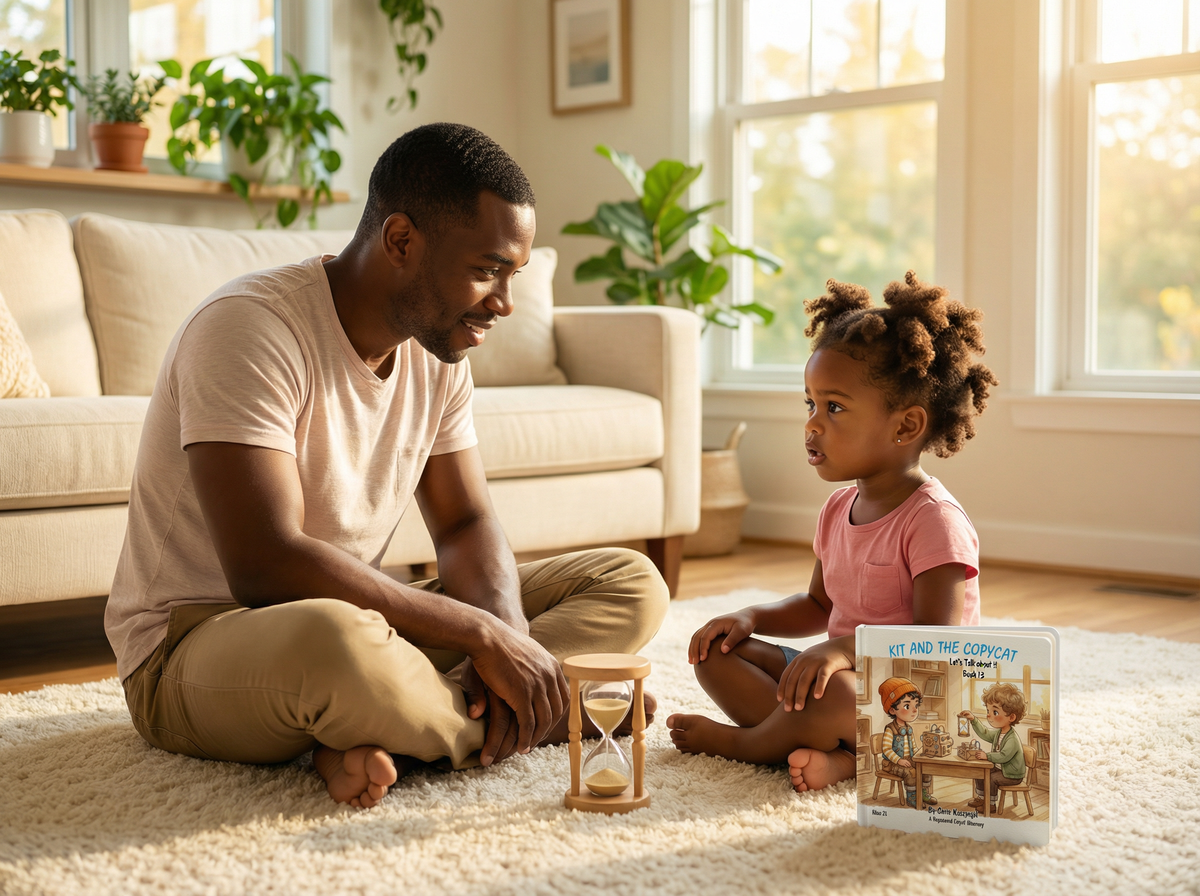
Grandma Rosa unwraps the fabric, finds the painted cup, and her hand goes to her heart. "You MADE this? For ME?" That moment in Book 16: Kit Gives It Away is the closest thing I have to a theory of family engagement. The book goes home. The grown-up is in the story. Something gets made for someone.
Where the topic comes from
NAEYC's 2020 DAP guidelines list six areas of practice, and the second is engaging in reciprocal partnerships with families. Reciprocal is the operative word: information flows both ways, not just from the classroom home. NAEYC keeps a standing Family Engagement hub for the same reason.
California's 2024 Approaches to Learning foundations include a teacher section titled "Collaborate with Families." And Early Edge California's 2026 policy agenda names a practical gap: many families of three- and four-year-olds still do not know what programs exist for them, and the fix it proposes is intentional, repeated communication. Engagement is not a spring event. It is a habit with a delivery mechanism.
The delivery mechanism
Every book in the series carries a QR code in the back, and every code opens the same page: the resource hub. For each of the 20 books there is a free read-aloud MP3, a family activity sheet, and a link to the educator guide, whose last page is written for the family. No login. No app. The classroom reads Book 4 on Tuesday; the child scans the code at home Tuesday night and the same voice reads it again; the family sheet has one activity and one question.
One activity, one question. That is the whole newsletter. A family that gets one question a week ("How does Mia feel?") asks it. A family that gets a page of standards language does not.
What the books do at home that they cannot do at school
Book 16 is the clearest example. Kit wants to make something for Grandma Rosa, not for himself. Ama teaches him to wrap it in fabric with a careful bow. The gift is a Steady Sippy with tiny painted flowers, because Grandma loves flowers. A preschool can read that book. Only a family can do it: pick the person, paint the cup, watch the hand go to the heart.
What you can do
- Educators: send the question home, not the summary. Put the week's one question on the door at pickup. "Ask your child: what did Kit fix?"
- Families: play the MP3 in the car, then read the book at bedtime. Same words twice in one day is how a three-year-old learns to "read" it back to you.
- Both: make one thing for one person this month. Book 16's activity sheet has the steps. The bow matters more than the paint.
The Educators page has all 20 guides and the family sheets in one place. Scan any book's code with the family and see what the child does with the voice.
Sources
- NAEYC, Guidelines for Developmentally Appropriate Practice in Action (the six areas of practice). www.naeyc.org/resources/position-statements/dap/guidelines
- NAEYC topic hub, Family Engagement. www.naeyc.org/resources/topics/family-engagement
- California Department of Education, California Preschool/Transitional Kindergarten Learning Foundations: Approaches to Learning (2024). Original PDF. Archived copy on littlesparksbooks.com (PDF), saved in case the original moves.
- Early Edge California, 2026 Policy Agenda. earlyedgecalifornia.org/early-edge-californias-2026-policy-agenda/
Chris Kuczynski is an engineer turned registered patent attorney, a preschool co-founder, and a dad. He is the author of Kit's Little Sparks, a 20-book STEM series that gives children ages 2 to 4 the social and emotional foundations of the inventor's mindset. It is the first of four age-tiered series for readers ages 2 to 12.

Written by Chris Kuczynski