
STEM Books for Toddlers
Twenty books for children ages 2 to 4 that teach the foundations of inventing, creativity, and intellectual property. Written by a patent attorney and grounded in a real preschool classroom that produced a real U.S. patent.
Most STEM books for toddlers do one of two things: they teach the names of body parts and dinosaurs, or they show kids photos of scientists working. Both are fine. Neither teaches a child the practice of being an inventor.
Kit's Little Sparks is a 20-book picture book series that does something different. Each book takes one step of the inventor's mindset and turns it into a story a 2 to 4 year old can absorb, scaled to the patience and attention span of a toddler. By the end of the series, a child has walked through all five phases of inventing: noticing, making, sharing, growing together, and becoming.
This page is the parent's and educator's guide to all 20 books. Scroll down for the full collection, the five-phase structure, what makes the series different, frequently asked questions, and where to start.
The 20 books
Each book stands alone. The series is designed to be read in order or in any order. Most families read book 1, then jump to whichever book matches what their child is working on that week.
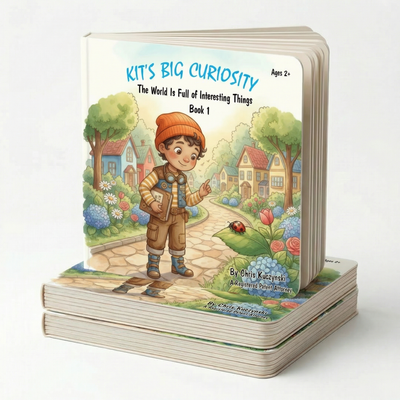
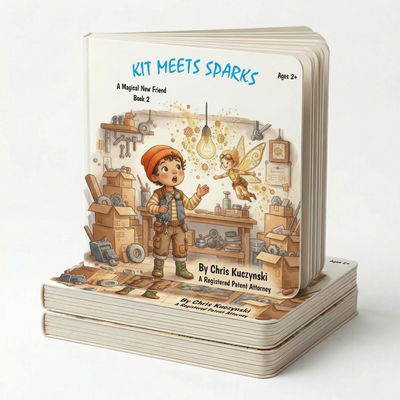
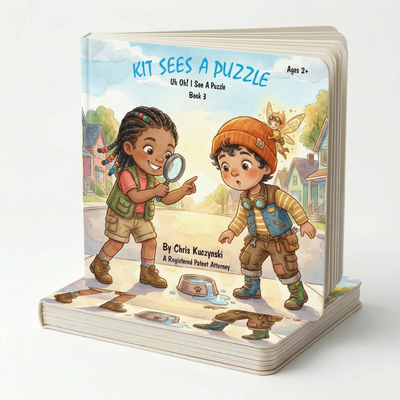
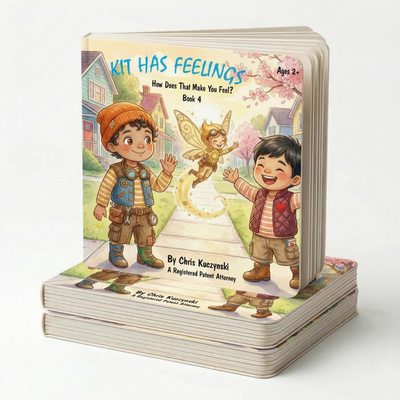
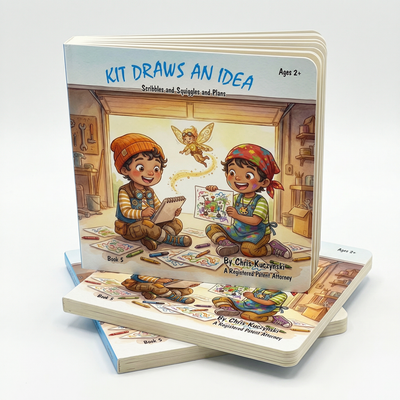
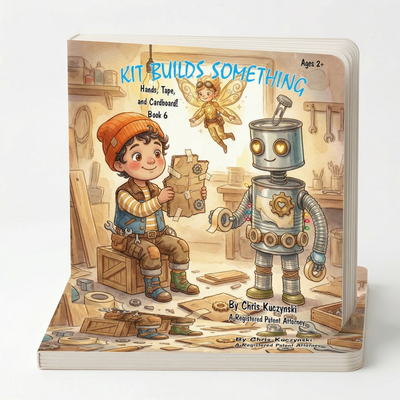
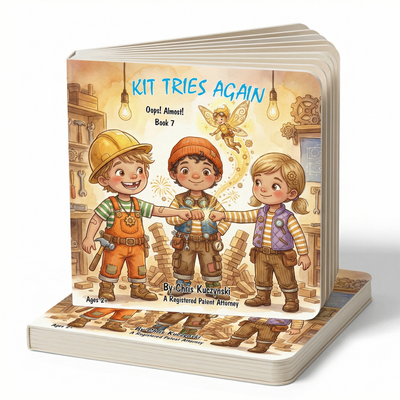
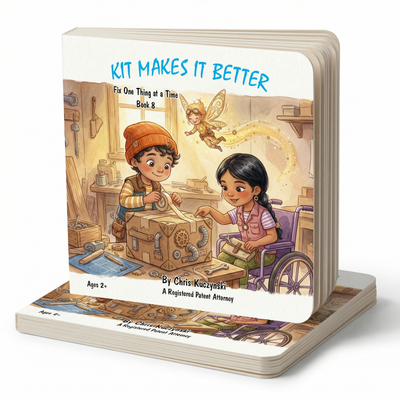
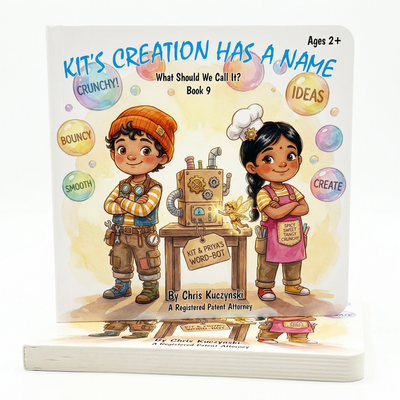
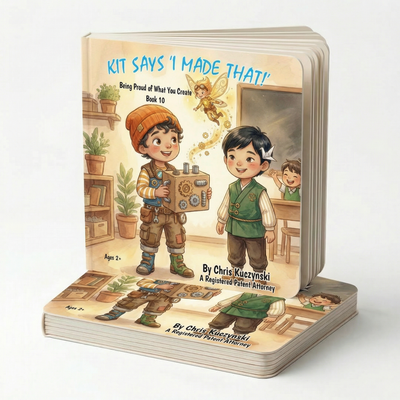
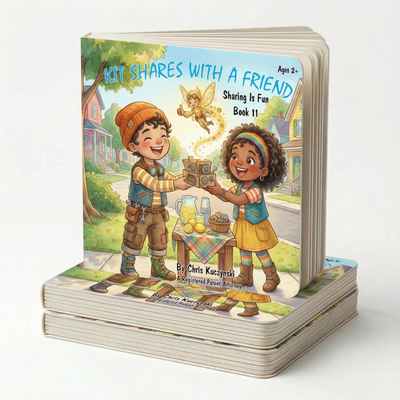
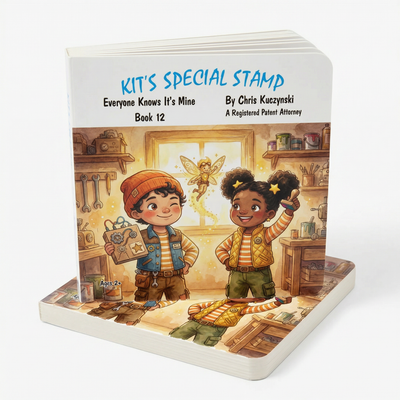
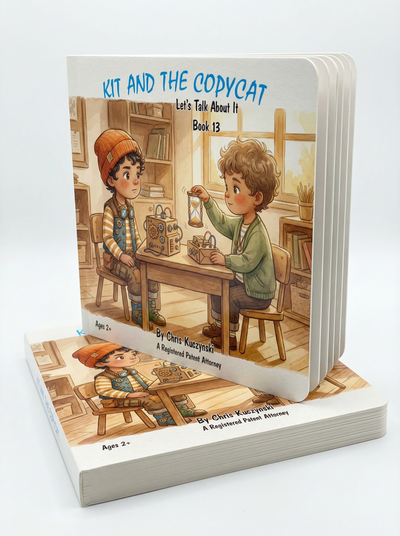
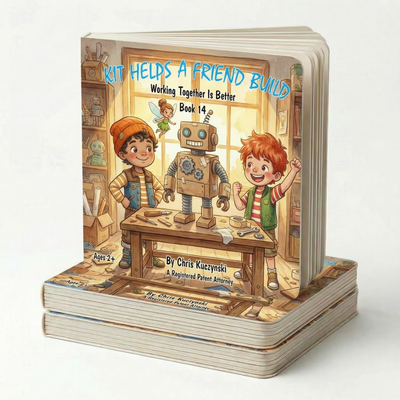
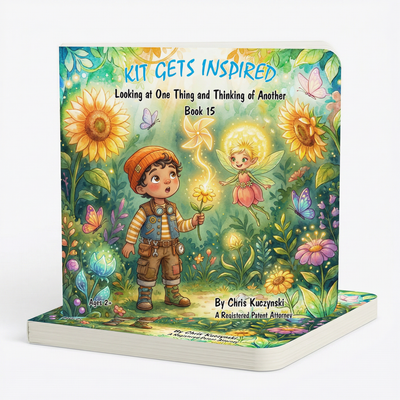
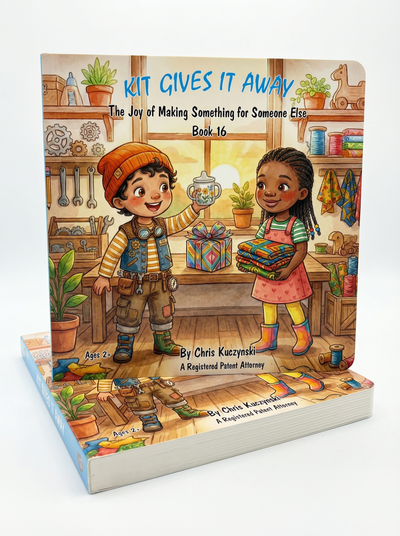
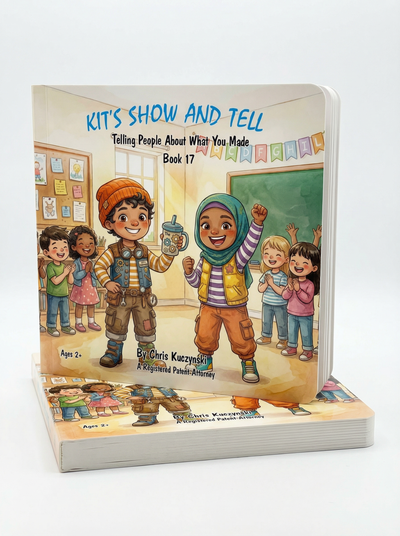
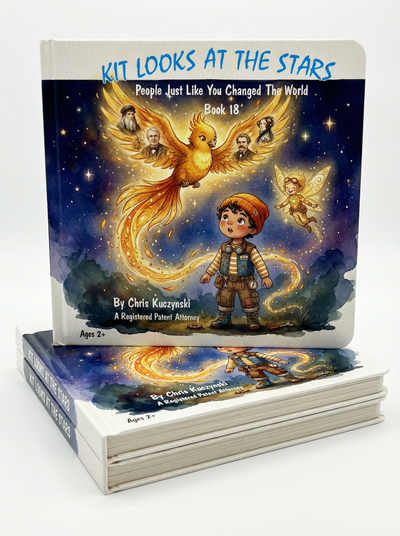
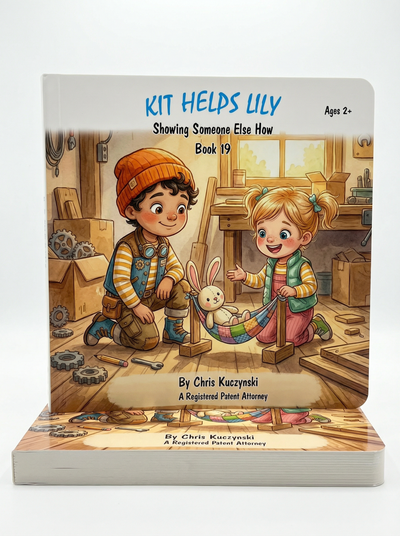
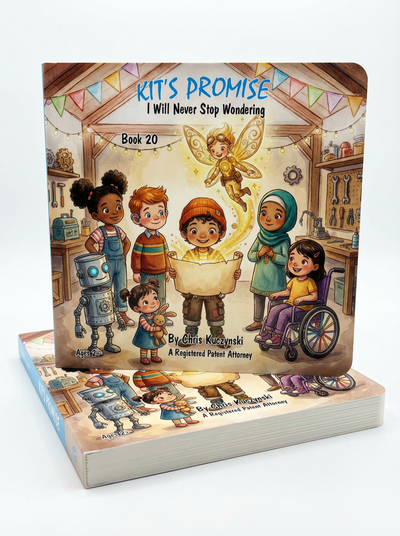
The five phases of the inventor's mindset
The 20 books are organized into five gentle phases. Each phase is also a collection on the site, so you can dive into the four books that belong to whichever phase your child is in right now.
Why Kit's Little Sparks is different
Most toddler books treat children as small adults who need scaled-down content. Kit's Little Sparks treats them as starting inventors who need the real method, scaled to their hands.
The series began with a real moment in a real classroom. A five-year-old at the preschool our founder co-founded developed his own concept for a new dog leash. He sketched it. He wrote his own description of what made it different. He designed a trademark for the company he imagined would sell it. He presented the whole thing to his class.
Our founder, an engineer turned patent attorney, took the student's concept through the formal patent attorney's work and prosecuted the application. On October 22, 2024, the United States Patent and Trademark Office granted the design patent. The inventor named on the certificate is the student.
The lesson wasn't that this student was unusual. It was that every step the student did is teachable. Sketching, articulating what's new, naming and branding the thing you made: these are starting skills, available to any child when the adults around them take the work seriously.
Kit's Little Sparks is the 20-book series our founder wrote so every child can walk that same path.
Read the full origin storyWhat you get with every book
- Soft watercolor illustrations designed for read-aloud
- Page rhythms that match a toddler's attention span
- A closing activity page kids can do alongside Kit
- A free printable activity sheet at littlesparksbooks.com
- A free educator guide aligned to NGSS science and engineering practices
- A narrated read-aloud video for bedtime, classroom, and car trips
- Available as ebook, paperback, and hardcover; board book on the waitlist
Frequently asked questions
The questions parents and educators ask most often before buying.
Are these books really appropriate for 2 year olds?
Yes. The series is built for ages 2 and up, with page rhythms, vocabulary, and story length scaled to a toddler's attention span. The hardcover and paperback editions are library-grade prints on smooth, kid-friendly stock and work for ages 2 through 5. Many families come back to the books with older siblings. A board book edition (7x7 trim, rounded corners, thick pages built for toddler hands) is on the waitlist.
Do I need to read them in order?
No. Each book stands alone. The series follows a five-phase arc (Wondering, Making, Sharing, Growing Together, Becoming) and most families start with Book 1 (Kit's Big Curiosity), but you can jump to whichever book matches what your child is working on that week. Frustrated with something not working? Book 7 (Kit Tries Again) is the one that night. Just made something they want to show off? Book 10 (I Made That).
Are these board books, hardcovers, or ebooks?
All of the above. Every book in the series is available in four formats: ebook (Kindle, Apple Books, Kobo, Google Play, Barnes and Noble), paperback ($13.99), and hardcover ($22.99). The board book edition (7x7 trim, rounded corners, thick pages for toddler hands) is on the waitlist here on this site.
Is this STEM, social-emotional, or something else?
Both, plus a third thing. Kit's Little Sparks combines STEM (the inventing, building, problem solving) with social-emotional learning (naming feelings, handling frustration, sharing, kindness) plus the foundations of intellectual property (your work has your name on it, copycats can be handled with words, ideas deserve a special stamp). The blend is the whole point: real inventing requires all three.
Who wrote these and why should I trust them with my child's first books?
Chris Kuczynski wrote the series. He began his career as an engineer, spending his first 12 years building things, before becoming a patent attorney to help other inventors protect what they build. He is co-founder of a preschool. The series grew out of a real class invention project at his preschool that produced a U.S. design patent. The full story is on the Universe page.
Are there educator resources, activity sheets, or curriculum guides?
Yes, and they are free. Every book has a printable activity sheet and an educator guide available at littlesparksbooks.com/pages/resources. The educator guides are aligned to NGSS science and engineering practices and include classroom discussion prompts, hands-on activity extensions, and assessment ideas. Teachers can request access to the full educator hub via the form on the For Educators page.
What comes next? Are there older-age books?
Yes. Kit's Little Sparks is Series 1 of three planned series. Series 2 (Kit's Inventor Workshop, ages 4 to 6) launches Q3 2027 and teaches the four pillars of intellectual property (trademarks, copyrights, patents, trade secrets) through stories. Series 3 (The Inventor's Journal, ages 6 to 8) launches in 2028 and turns the inventor's mindset into a working journal practice. All three series share the same Kit character and the same five-phase method.
Want the full story?
The Universe page tells you where this series came from, who Chris is, and how the patent that started everything came to be. It's the brand story behind the books.
Read about Kit's UniverseStart with Book 1, or browse the full set
Book 1 (Kit's Big Curiosity) is the natural starting point. If you want all 20 at once, the complete set ships at a bundle price.