Trademark vs Patent, Explained for Kids
Here is the difference, in one sentence each, in language a four-year-old can follow.
- A patent is what you get for an idea nobody else has invented yet.
- A trademark is what you get for a name or a mark that makes everyone know it is yours.
The patent is about what the thing does. The trademark is about whose thing it is.
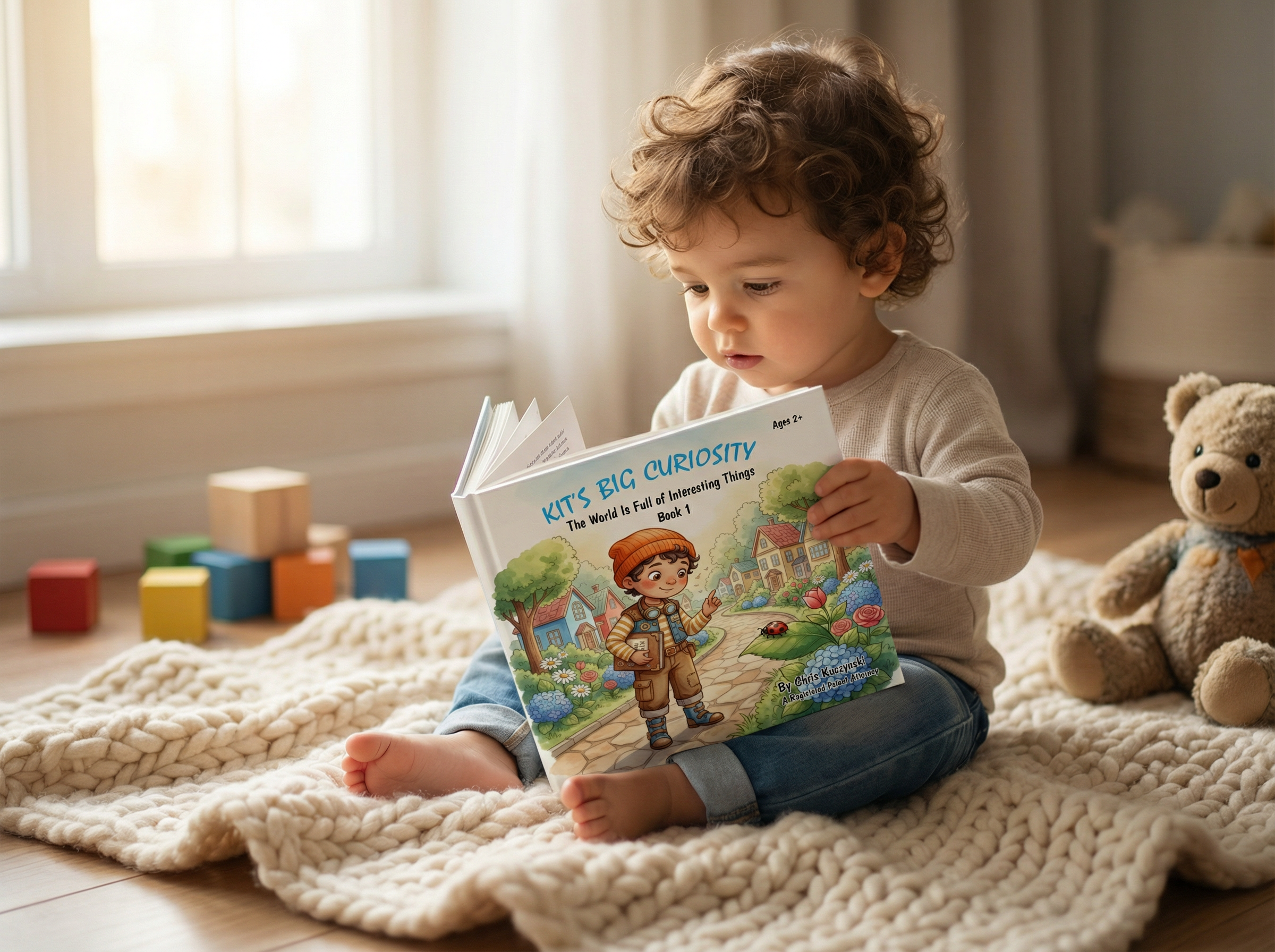
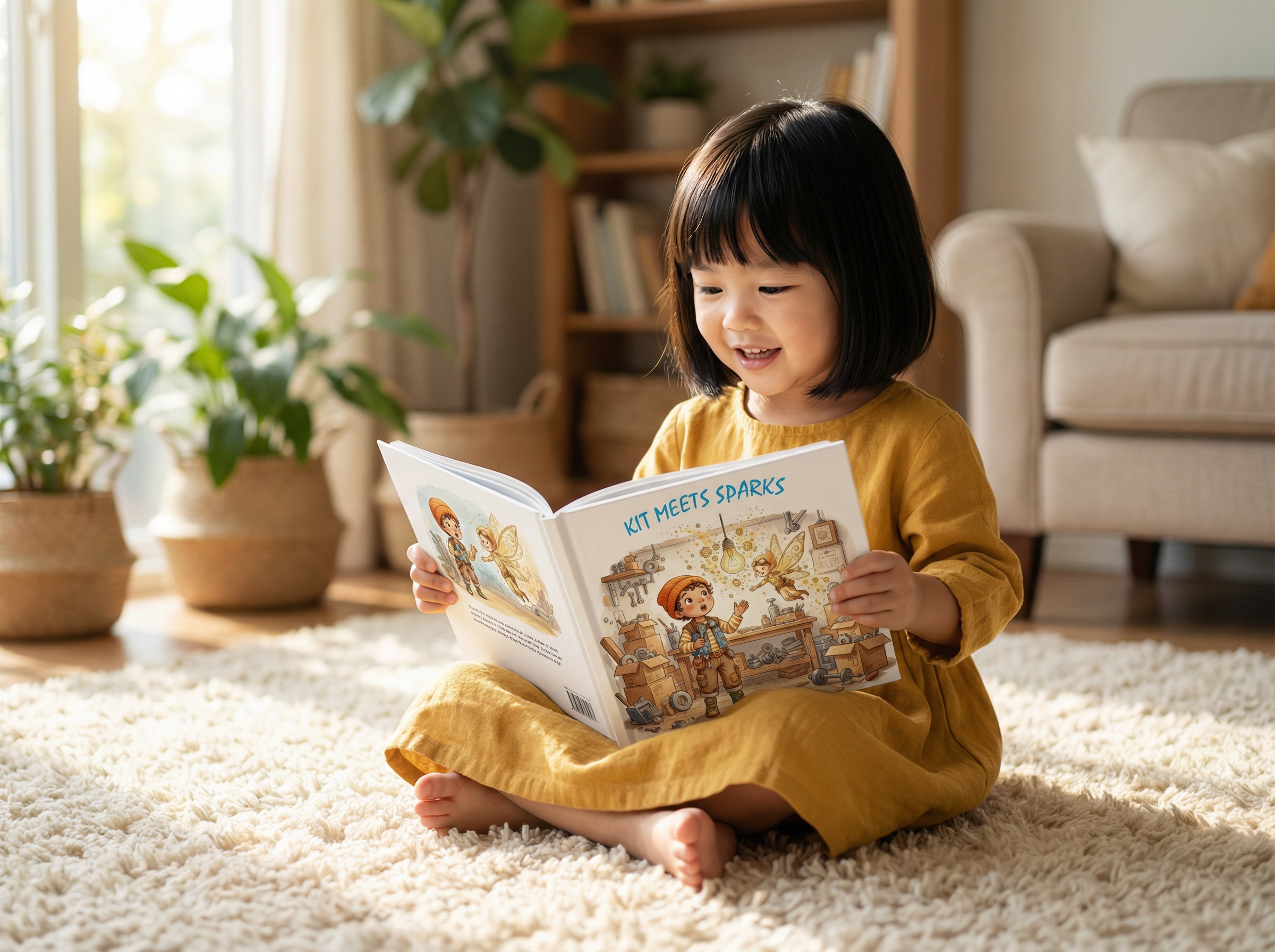
If you want to see how these ideas land for a two-year-old in board-book form, browse our STEM board books for toddlers, the 20-book series that introduces inventing and naming long before kids learn the legal words for them.
A story that makes the difference click
Imagine a four-year-old named Mia. She has a juice cup that tips over every time she puts it down. One afternoon she invents a fix, she tapes the cup to a wide cardboard base so it cannot tip. She calls it The Steady Sippy.
The Steady Sippy is two different things at once.
- The way it works, taping a cup to a wide base, is what a patent protects. If Mia invented something nobody had thought of before, and it was new and useful and a real improvement, that idea could be patented. A patent says: for a while, only Mia can sell things made this way.
- The name "The Steady Sippy" and the special K stamp Mia drew on the side are what a trademark protects. The trademark says: when you see this name or this stamp, you know Mia made it.
So if another kid copies the way Mia taped the cup, that is a patent question. If another kid copies the name and the K stamp and pretends their cup is The Steady Sippy, that is a trademark question.
The four-year-old version of the distinction
Patents protect how something works.
Trademarks protect how someone knows it is yours.
That is enough. You do not need to teach a four-year-old about utility versus design patents, dilution, or the Lanham Act. You need to teach them that both protections exist, that they are different, and that they matter when other people get involved with what you made.
Why this matters for toddlers
I am a patent attorney. I have spent 20 years watching adults wrestle with the question "is this thing mine?" The answer, for grownups, almost always comes down to did you write it down, did you mark it, did you tell people about it before someone else did? Those are not legal habits. They are habits of mind. And the developmental window where habits of mind form most easily is ages 2 to 5.
When a four-year-old learns to put a special K on the side of their cardboard fort, they are not learning trademark law. They are learning the habit of marking what they made. The legal version becomes available later. The habit has to be there first.
Books that teach this idea without using the words
I wrote two books in the Kit's Little Sparks series specifically to plant these seeds. Neither one uses the word "patent" or "trademark." Both teach the idea.
- Kit's Creation Has A Name (Book 9), naming what you made. The toddler version of "what should we call this invention?" The first step in claiming any creation.
- Kit's Special Stamp (Book 12), putting a maker's mark on your work. The toddler's first trademark.
Two more books in the series cover what happens when someone else copies:
- Kit and the Copycat (Book 13), handling a copycat with words, not fights.
- Kit Gets Inspired (Book 15), the difference between copying and inspiration. The line is teachable even to four-year-olds.
One question to ask at the dinner table
After you read any of these books with your toddler, ask one question:
"What did you make today that you want everyone to know is yours?"
The answer will surprise you. And the next time someone at preschool says "did you copy me?" your toddler will have a softer, smarter answer than they would have had otherwise.
Chris Kuczynski is a registered United States patent attorney with 20+ years of experience and the cofounder of a preschool in Carlsbad, California. He writes the Kit's Little Sparks book series for ages 2 to 4, available in ebook, paperback, and hardcover. The board book edition is on the waitlist.

Written by Chris Kuczynski