Ten Words a Page: Dual Language Learners, Feeling Words, and the Free Audio
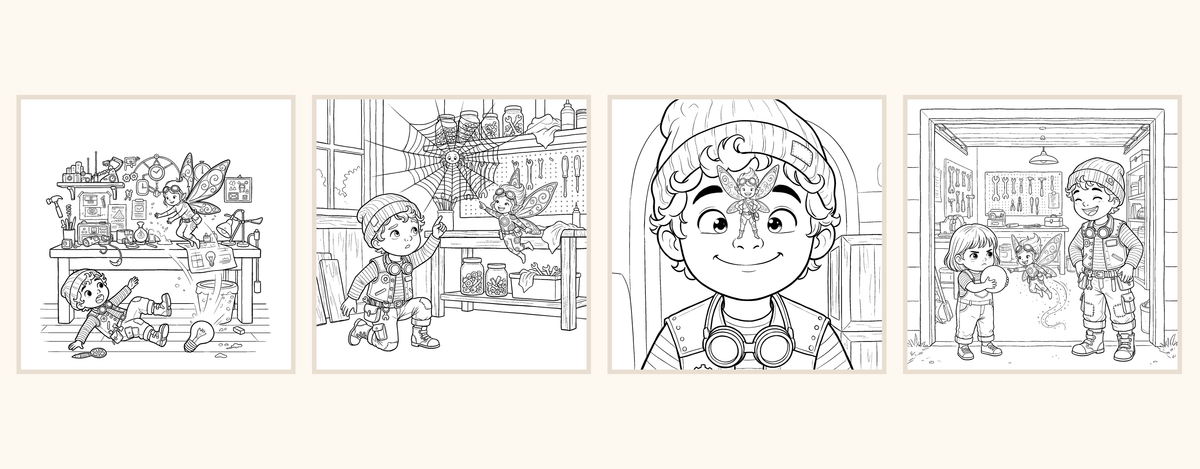
"Someone MADE that! And THAT! And THAT!" Sparks points at a bicycle, a hammer, a lightbulb, Kit's belt, and says it again. A child who does not yet have English can shout the third one with her. That is the whole design of Book 2: Kit Meets Sparks, and it turns out to be what California asks for.
Where the topic comes from
The 2024 California Preschool/TK Learning Foundations fold English Language Development into the Language and Literacy domain, whose first strand is Listening and Speaking (sub-strands Grammar, Language Use, and Vocabulary). The foundations are written for children learning English alongside a home language, and they treat the home language as an asset, not a delay.
Early Edge California, the policy group that pushed the state to identify dual language learners in early programs, keeps a standing priority page on the same point: the strengths these children bring start at birth, and programs are asked to build on them. In a California preschool classroom a child learning English alongside a home language is not a special case. It is the room.
What a ten-word page does
The Series One books run on short lines and a repeating frame. In Book 2 the frame is "Someone MADE that." In Book 1 it is "Kit looks up. Kit looks down." A child hears the frame four times in a row, with one word changing. That is vocabulary instruction in the shape a three-year-old can hold, whatever language they think in.
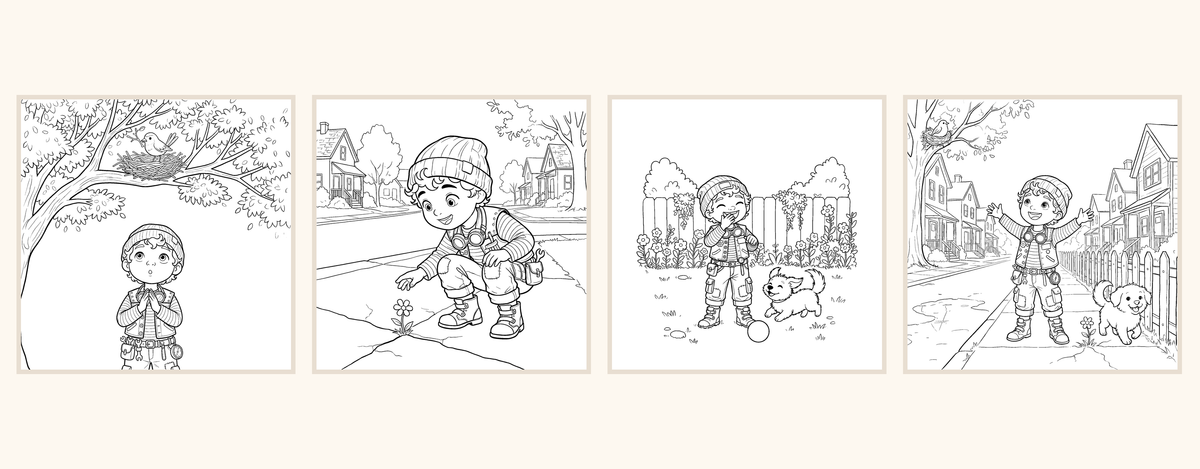
Book 4: Kit Has Feelings does the same with feeling words. Bao asks "How does Mia FEEL?" and the answer is one word and one face: sad, frustrated, silly, small. Four words a child can carry between two languages, because the face is the same in both.
The recorded voice
Every book has a free read-aloud MP3 behind its QR code, read slowly, with the call-and-response cues in it. A parent who reads English with an accent, or not at all, can play the recording and hold the book. The child hears the English words from the recording and the home-language talk from the parent, on the same page, at the same time. That is the two-language read-aloud the foundations describe, without anyone being asked to switch languages.
What you can do
- Play the MP3 once, then read the page in your home language. Same picture, two languages, one night.
- Let the child say the refrain. "And THAT!" needs no grammar and gets a laugh every time.
- Use Book 4's four feeling words in both languages at dinner. The face card works for either.
All twenty recordings and activity sheets are free on the resource hub. The educator guide for Book 2 has circle-time questions with a wordless fallback for every one, written for the child who is not ready to answer in English yet.
Sources
- California Department of Education, California Preschool/Transitional Kindergarten Learning Foundations: Language and Literacy Development (2024). Original PDF. Archived copy on littlesparksbooks.com (PDF), saved in case the original moves.
- California Department of Education, California Preschool/Transitional Kindergarten Learning Foundations overview page (nine domains). www.cde.ca.gov/sp/cd/re/psfoundations.asp
- Early Edge California, Dual Language Learners priority page. earlyedgecalifornia.org/ece-priorities/dual-language-learners/
Chris Kuczynski is an engineer turned registered patent attorney, a preschool co-founder, and a dad. He is the author of Kit's Little Sparks, a 20-book STEM series that gives children ages 2 to 4 the social and emotional foundations of the inventor's mindset. It is the first of four age-tiered series for readers ages 2 to 12.

Written by Chris Kuczynski