A Friend's Difference Is a Fact, Not a Plot: Inclusion in Books 8, 14, and 19
Devi rolls up in a purple wheelchair and has the steadiest hands in the neighborhood. Milo sometimes wears hearing aids and sometimes does not. Lily is tiny and timid and clutches a bunny named Biscuit. None of those facts is the plot of the book the child appears in. That is on purpose, and it is what the inclusion documents actually ask for.
Where the topic comes from
In 2009 the Division for Early Childhood and NAEYC issued a joint position statement on Early Childhood Inclusion. It defines inclusion through three features: access (the child is there), participation (the child does what everyone does), and supports (adults make that possible). NAEYC's 2019 Advancing Equity position statement builds on it, asking educators to embrace full inclusion as a strength.
California put money behind the same idea. The state's Master Plan for Early Learning and Care called for inclusive settings, and the state has since funded the Inclusive Early Education Expansion Program to pay for the infrastructure and training inclusive classrooms need. The 2024 Preschool/TK foundations add a sub-strand called Equitable Social Interactions under peer relationships. The question is no longer whether a child with a disability belongs in the room. It is what the other children learn from the way the room treats them.
How the series handles it
The rule I wrote for myself was simple: a friend's difference is a fact the reader can see, never a problem the story solves.
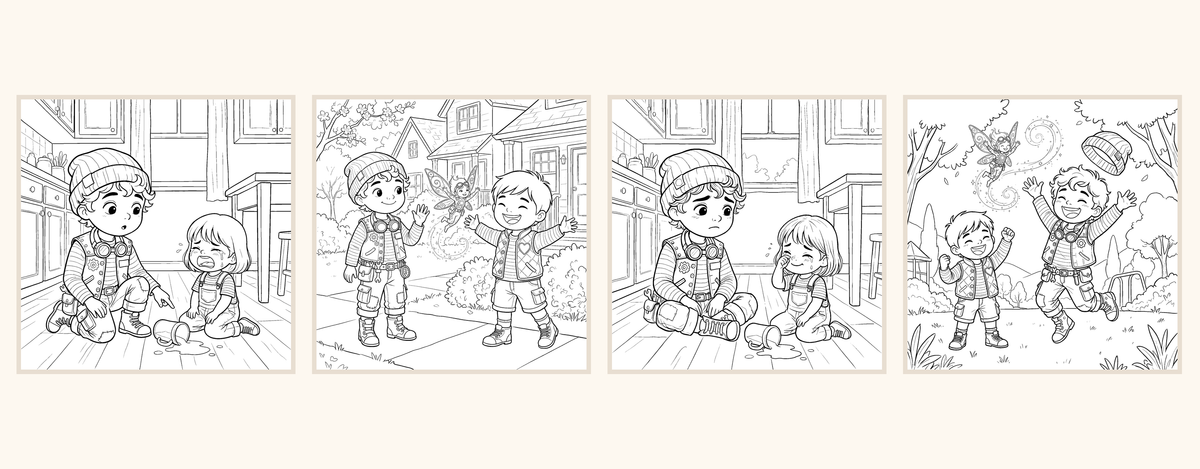
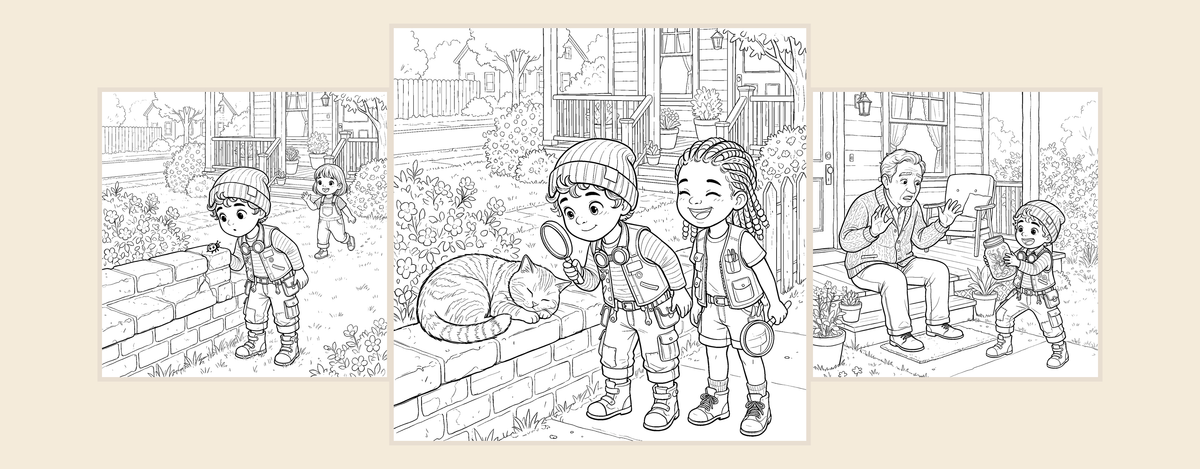
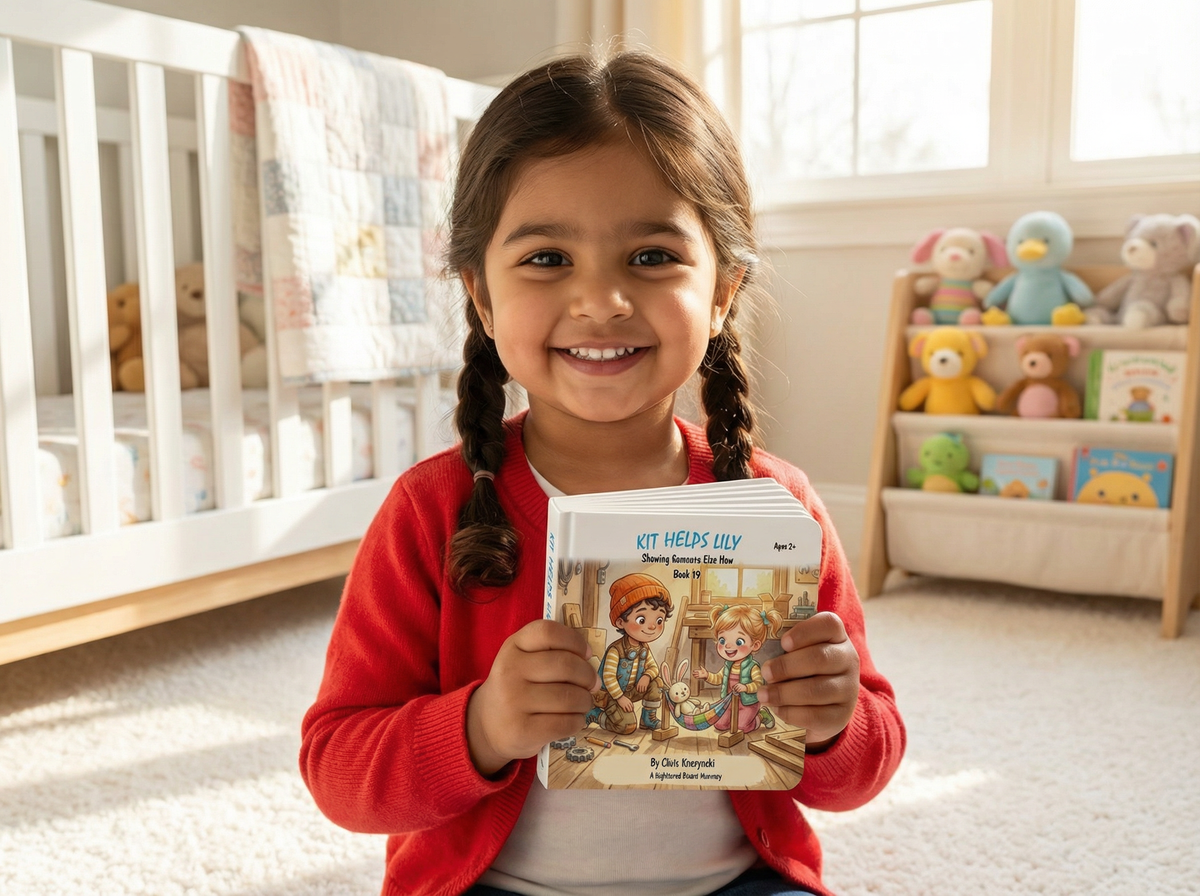
In Book 8, Devi is the expert. She does not get helped. She helps, one fix at a time, because her hands are steadier and her eyes are sharper than anyone's. In Book 14, Milo wears hearing aids on some days and not others, and Kit faces him when they talk. Nobody remarks on it. In Book 19, Lily is smaller and shyer than everyone, and the book is about Kit learning not to take over. Her bunny hammock is hers.
The explaining happens where it belongs, in the back. Book 14 carries a page for the grown-up that explains hearing aids in three minutes of plain words, plus what you can do. It is written for a parent to read and then say in their own voice, without turning the story into a lesson about accommodation. That page is the standard for the series: the friend's difference, explained to the adult, never to the plot.
What you can do
- Read the story first, without comment. If the child asks about the hearing aids or the wheelchair, answer in one sentence and go back to the page. If they do not ask, do not raise it. The picture is doing its work.
- Use the back page the next day, at a calm moment, as its own small conversation.
- Notice who is the expert. Ask "who knew how to fix it?" in Book 8. The answer is Devi, and a four-year-old will say so without prompting.
The educator guide for Book 14 carries the standards table and the "Build Together" family sheet. The short version: Milo is in the room, Milo builds, and Kit faces him when he talks. Access, participation, supports, on one spread.
Sources
- DEC and NAEYC, Early Childhood Inclusion: A Joint Position Statement (April 2009). Also indexed by ERIC as ED631340. Original PDF. Archived copy on littlesparksbooks.com (PDF), saved in case the original moves.
- NAEYC, Advancing Equity in Early Childhood Education, position statement adopted April 2019. Web version at naeyc.org. Original PDF. Archived copy on littlesparksbooks.com (PDF), saved in case the original moves.
- California Health and Human Services Agency, Master Plan for Early Learning and Care: Making California For All Kids (December 2020). Original PDF. Archived copy on littlesparksbooks.com (PDF), saved in case the original moves.
- California Department of Education, California Preschool/Transitional Kindergarten Learning Foundations: Social and Emotional Development (2024). Original PDF. Archived copy on littlesparksbooks.com (PDF), saved in case the original moves.
Chris Kuczynski is an engineer turned registered patent attorney, a preschool co-founder, and a dad. He is the author of Kit's Little Sparks, a 20-book STEM series that gives children ages 2 to 4 the social and emotional foundations of the inventor's mindset. It is the first of four age-tiered series for readers ages 2 to 12.

Written by Chris Kuczynski